Why Hplc Purity Testing Matters For Research Peptides 2026
s
@sethinnm036
October 2, 2026 · 4 min read

Peptide And Peptoid Synthesis Core High Efficiency Fluid Chromatography ( HPLC) method growth, validation, and evaluation is one of one of the most commonly utilized strategies for medicine testing in formulas and biological fluids. Purity is calculated by dividing the major optimal area by the complete integrated location of all UV-absorbing peaks. Regular setups Semax for standard, assimilation, flow rate, and slope problems are essential for comparable data. William is a study analyst at Peptides Lab UK, being experts in research study peptides, research laboratory compounds, and sourcing criteria for high-purity peptide products. Peptides are delicate and can conveniently come to be jeopardized if you aren't cautious. This is why logical testing throughout formulation growth is so important.
- Every credible peptide supplier gives a Certification of Analysis (CoA) with each product.
- High-Performance Fluid Chromatography, typically known as HPLC, is the gold basic analytical approach for examining peptide pureness.
- Prax Peptides presumes no obligation for the abuse of any kind of products or info offered on this website.
- Pinnacle's Exactly how to Check out a Peptide COA overview goes through this procedure detailed.
Tabulation
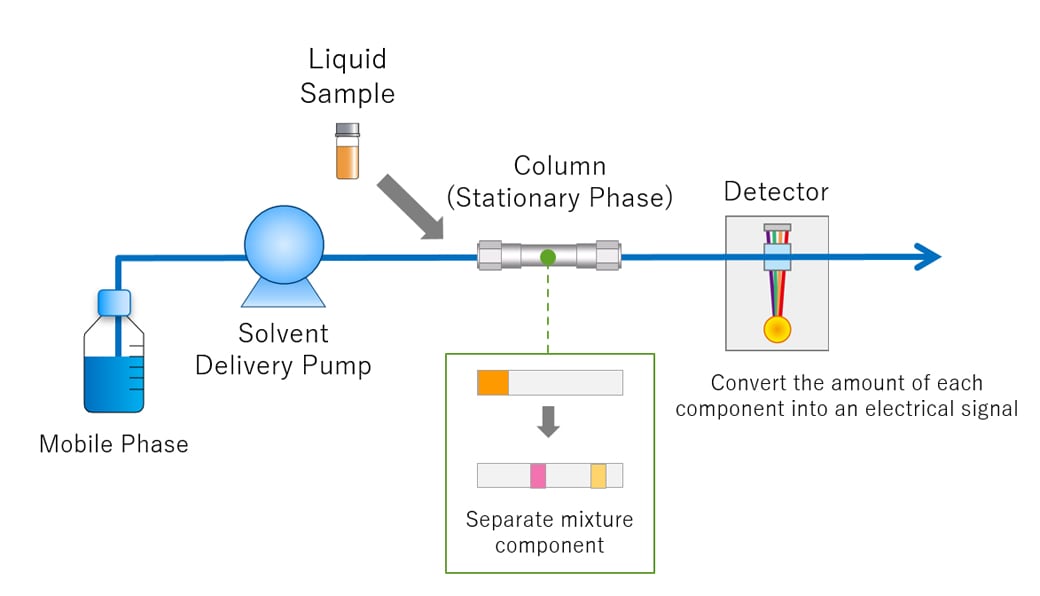
Inside the column are microscopic fragments that briefly "get hold of onto" various materials in the example. Our most recent effective research study was an essential bioequivalence study, where samples get more info from a cross-over study with about 100 volunteers required swift analysis. Join over 5,000 energetic participants and get updates on new arrivals and most current laboratory reports. These approaches are very delicate, allowing them to detect even map quantities of pollutants. Degrees of air-borne bit impurities are established by keeping an eye on the visibility of number of fragments to comply with federal typical 209E which requires 1 cfm for air-borne particulate cleanliness. Met One Fragment Counter design 237A is used to establish the bit counts in the lab.What Peptide Pureness Indicates And Why It Matters?
Chiral techniques can attend to enantiomeric purity where stereochemistry is a problem. Residual-solvent or water-content tests can matter in manufacturing or stability contexts. These are valuable in the appropriate setting, yet they must be interpreted as method-specific proof instead of a global substitute for HPLC and MS. Peptide testing is powerful, however researchers need to review the scope of each approach thoroughly. Every research study peptide provided by Peptides Lab UK is separately examined and third-party validated to validate peptide purity, molecular honesty, and credibility. This ensures that every vial meets the greatest laboratory standards prior to getting to scientists throughout the UK and Europe. HPLC purity informs you what portion of the peptide example is the target peptide versus impurities (truncated sequences, deletion peptides, oxidation items). All these voices coming together, the record that ends up in your hands is not just a stack of chromatograms. We create the trustworthiness that allows those numbers travel undoubted right from your bench to the client's bedside. Researchers, labs, and research companies all rely on dependable information, and that starts with understanding that the peptide in the vial is exactly what it's expected to be. That's where HPLC (High-Performance Fluid Chromatography) and MS (Mass Spectrometry) screening come in. These two gold-standard methods are the foundation of contemporary laboratory evaluation, making sure peptides are pure, appropriately determined, and prepared for dependable experiments. As a UK Peptides Company, high quality confirmation is not simply an insurance claim; it's a system constructed for openness, scientific accuracy, and trust fund.How To Translate Consolidated Information For Certain Pureness Analysis?
Just how much does peptide HPLC testing cost?
The cost of peptide evaluation solution differs dramatically based on which methods your regulative bundle calls for: HPLC-UV Evaluation: $& #x 24; 300 & #x 2013; & #x 24; 800 per sample (basic pureness assessment) LC-MS (Fluid Chromatography-Mass Spectrometry): $& #x 24; 600 & #x 2013; & #x 24; 1,500 per sample (molecular weight verification).